About Us

Our vision is to love God and to reach our nation.

River Church Finland is born out of a vision to honor God in Finland! We believe that Sunday church can be a place where Christians can get spiritual nourishment so they can face the new week full of power!

Our vision is that every Finn will hear the good news of the Gospel and can find a church where they can grow in their faith in order to bear fruit. 

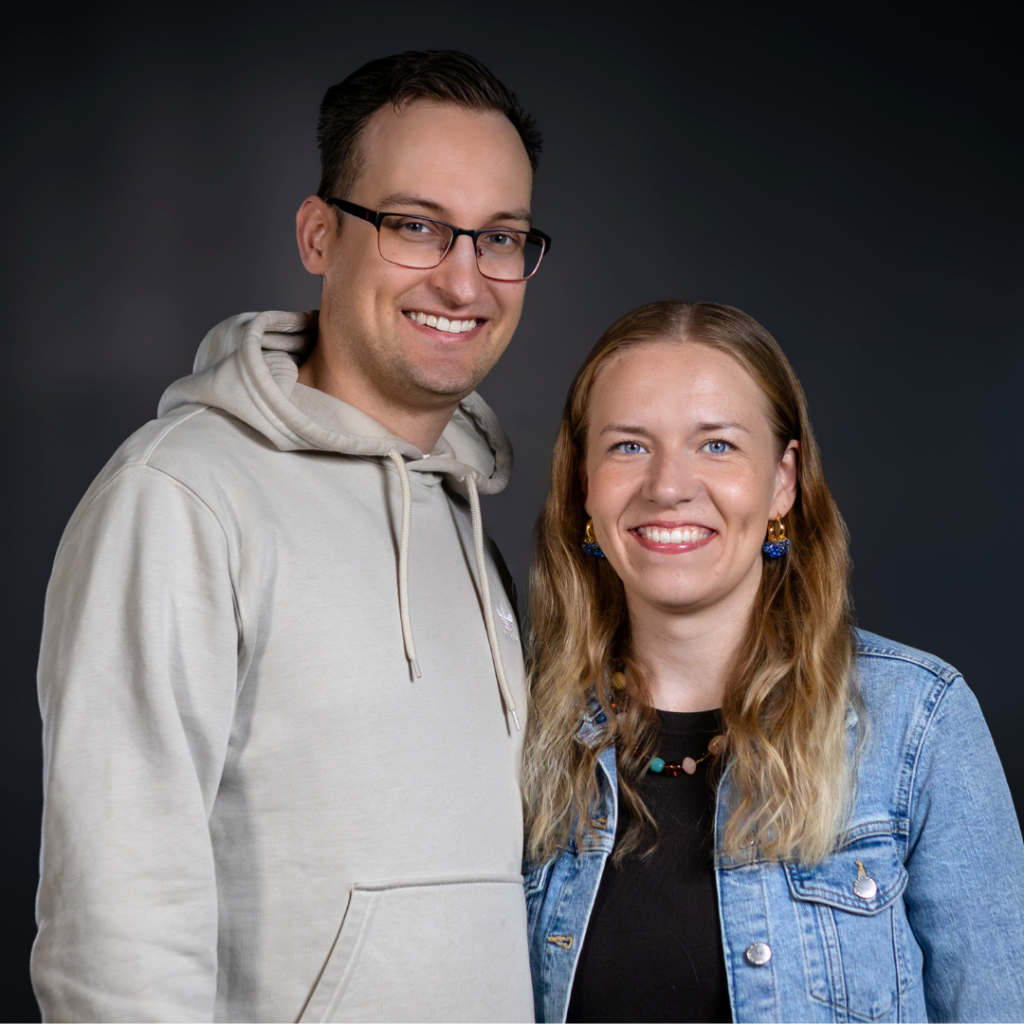
Tomi and Sanna Lehto

Pastors, river church finland

Tomi and Sanna were both born and raised in Finland, but spent several years in the United States, where they attended Bible school before going on to serve in a local church and international ministry in Tampa, Florida. During their time in the United States, their first two children, Maria and Jonathan, were born, and they became American citizens.

In 2008, the Lord began speaking to Tomi about His calling for his life, asking him, “What do you want from your life?” The answer came from Psalm 2:8: “Ask of me, and I will give you the nations as your inheritance, the ends of the earth as your possession.” Soon afterward, Tomi and Sanna began traveling throughout Finland as evangelists, sharing the gospel on the streets and encouraging believers across the country to boldly share their faith.

In 2012, River Helsinki Church and River Bible Institute were established in Helsinki, with a vision to train and equip believers for the work of the ministry. Their third child, Abigail, was also born.

Tomi and Sanna host a weekly television program, Hyvä Elämä (Good Life), which is broadcast in Finland, Estonia and Sweden.


“The greatest desire of our heart is to love God and serve people! This deep desire is that everyone can hear the good news of the Gospel and experience its changing power so they can live the good life God has prepared for each and everyone. We believe that God has a calling and a purpose for every human being and we want Christians to receive full equipment to carry out this mission.”

Why Do We Gather on Sundays?

Biblical Foundation: Acts 20:6–7

  • It took five days to reach Troas, and they stayed there for seven days (Acts 20:6).

  • On the first day of the week, they gathered together to break bread (Acts 20:7).

  • The early church was accustomed to gathering on Sunday, the first day of the week, as their Christian “Sabbath,” which they called “the Lord’s Day.”

  • There were several reasons why Sunday became their regular day to gather together as the body of Christ.

  • Christ rose from the dead on the first day of the week.

  • After His resurrection, Jesus appeared to His disciples on the first day of the week (Matthew 28:1; Mark 16:9; John 20:1, 19, 26).

  • The Holy Spirit was poured out in the upper room on the first day of the week (Acts 2:1).

  • The book of Revelation was given to John on Sunday, the Lord’s Day (Revelation 1:10).

  • Observing the first day of the week was a sign between them and Christ that they were His disciples.

  •  
  • Although one day is as good as another, it is beneficial for the church, the local body of Christ, to have an appointed day and time to gather.

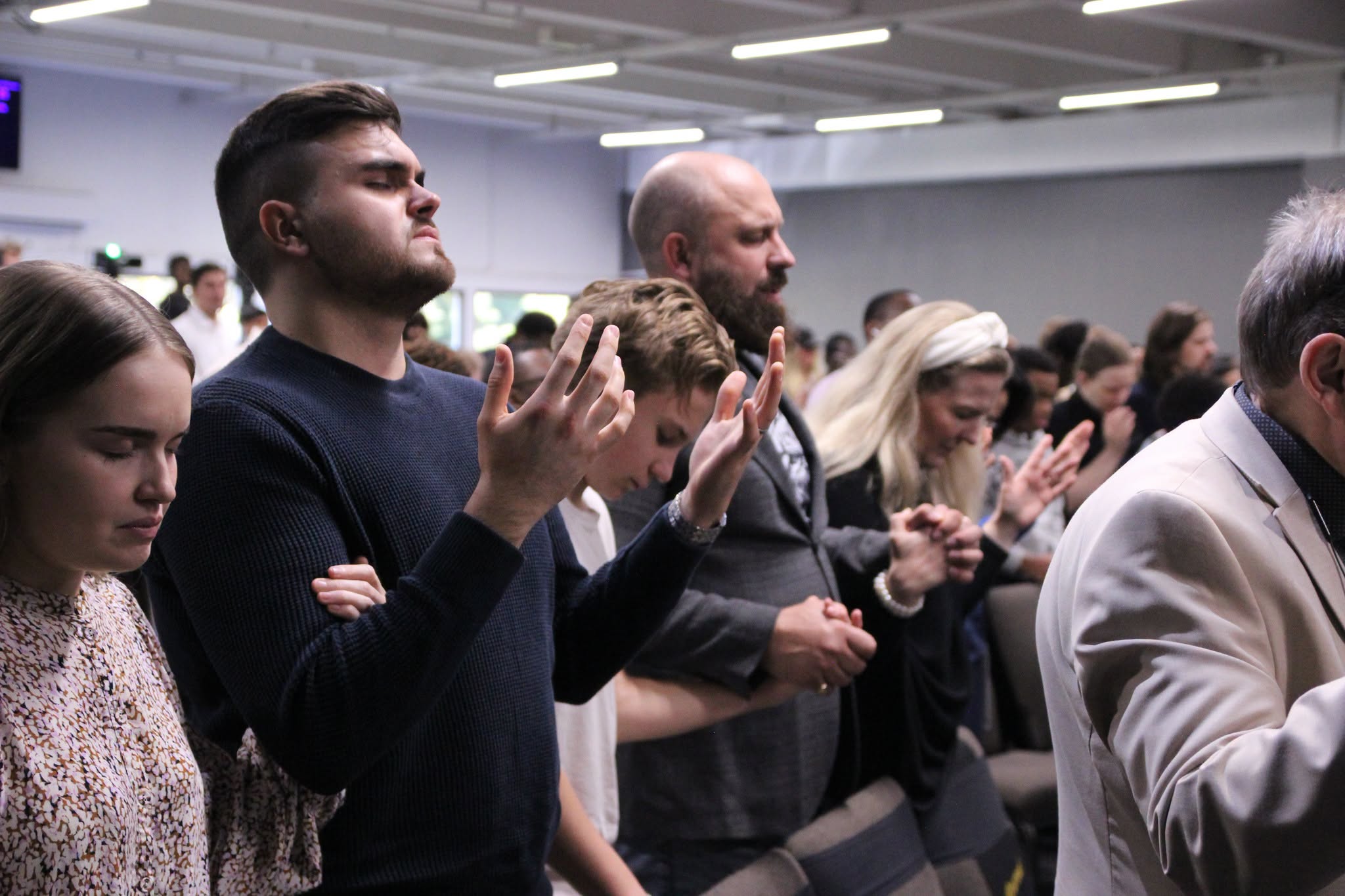
  • We gather to worship God, preach the Word, pray, minister by the Holy Spirit, and fellowship with one another.

  • We are not lone rangers. We are one body, and we need one another.

  • It is important to commit to gathering together regularly and not neglect or compromise this, regardless of what the enemy may do to hinder us.

  • Hebrews 10:24–25 teaches us to encourage one another toward love and good works, not forsaking our assembling together, but exhorting one another all the more as we see the Day approaching.

  •  
  • Some Christian denominations strictly observe Saturday as their Sabbath.

  • However, they do not understand that the Old Testament Sabbath was only a type and shadow of the New.

  • God gave them the Law on Sunday (Exodus 19:1, 3, 11).

  • Exodus 19:11 describes the people preparing for the third day, when the Lord would descend upon Mount Sinai before all the people.

  • The Jewish Sabbath was a changing Sabbath.

  • It shifted one day later each year at Pentecost.

  • Therefore, over a seven-year period, each day of the week was observed as the Sabbath in turn.

  • Pentecost was celebrated on the first day after the seventh Sabbath (Leviticus 23:15–21).

  • The Feast of Firstfruits, which symbolically represented the resurrection, was celebrated on Sunday (Leviticus 23:9–14; Matthew 28:1; John 20:1).

  • All of this pointed to Jesus and His death and resurrection!

  •  
  • During His earthly ministry, Jesus Christ did not observe the Sabbath restrictions in the way others expected. He treated it like any other day, healing people and doing good works.

  • In Mark 2:27–28, Jesus taught that the Sabbath was made for man, not man for the Sabbath, and that the Son of Man is Lord even of the Sabbath.

  • In Mark 3:4, Jesus asked whether it was lawful on the Sabbath to do good or evil, to save life or to kill. But they remained silent.

  • We are commanded to gather together, but nowhere in the New Testament did Jesus or the apostles command us to strictly observe a particular day. In fact, Scripture teaches the opposite (Romans 14:5–6; Galatians 4:9–11; Colossians 2:14–17).

  • Colossians 2:16–17 teaches us not to allow anyone to judge us regarding food, drink, festivals, new moons, or Sabbaths. These were shadows of things to come, but the substance belongs to Christ. The Amplified Bible emphasizes that the reality belongs to Christ.

  • Some Christian denominations prohibit certain normal, everyday activities on Sundays.

  • But if something is a sin on Sunday, it is also a sin on any other day.

  • And if it is not a sin on other days of the week, it is not a sin on Sunday either.

  •  
  • The disciples gathered together to break bread (Acts 20:7).

  • The bread we break as believers is the communion of the body of Christ (1 Corinthians 10:16).

  • Communion (Greek: koinonia) means fellowship, communion, community, shared participation, and intimacy.

  • First Corinthians 10:16–17 teaches that the cup of blessing is our participation in the blood of Christ, and the bread we break is our participation in His body. Although we are many, we are one body because we all partake of the one bread.

  • Jesus is that bread (John 6:32–51).

  • John 6:33 tells us that the bread of God is He who comes down from heaven and gives life to the world.

  • In John 6:35, Jesus declares, “I am the bread of life.” Whoever comes to Him will never hunger, and whoever believes in Him will never thirst.

  • As the Church of the Lord Jesus Christ, we gather together, as believers have throughout the ages, to preach and hear God’s Word, sing psalms, pray, and prophesy, encouraging one another and enjoying godly fellowship.

  • We gather to break the bread of fellowship together.

  • We also gather to partake of Communion, the bread and wine representing His body and blood, our healing and salvation.

  • First Corinthians 11:26 teaches that whenever we eat this bread and drink this cup, we proclaim the Lord’s death until He comes.

  • For every believer, every day is a day to serve and worship God from the heart.

  •  

Meet Our Team

Pekka & Sofia Hakanen
Associate pastors
Meri Hannikainen
associate pastor
Elsa Rós Ragnarsdóttir-Välimaa
administrative manager
Marjut Järvinen
Office Manager
Katariina Keränen
Finance Manager
Janri Rech
Media, Communications & Creative Manager
Silas Rech
media, IT Administrator
Andrew Dansie
media, Video Editor

Welcome!

Sundays at 10AM & 5PM

Simultaneous translation available in English, Finnish, Tamil and Russian.